
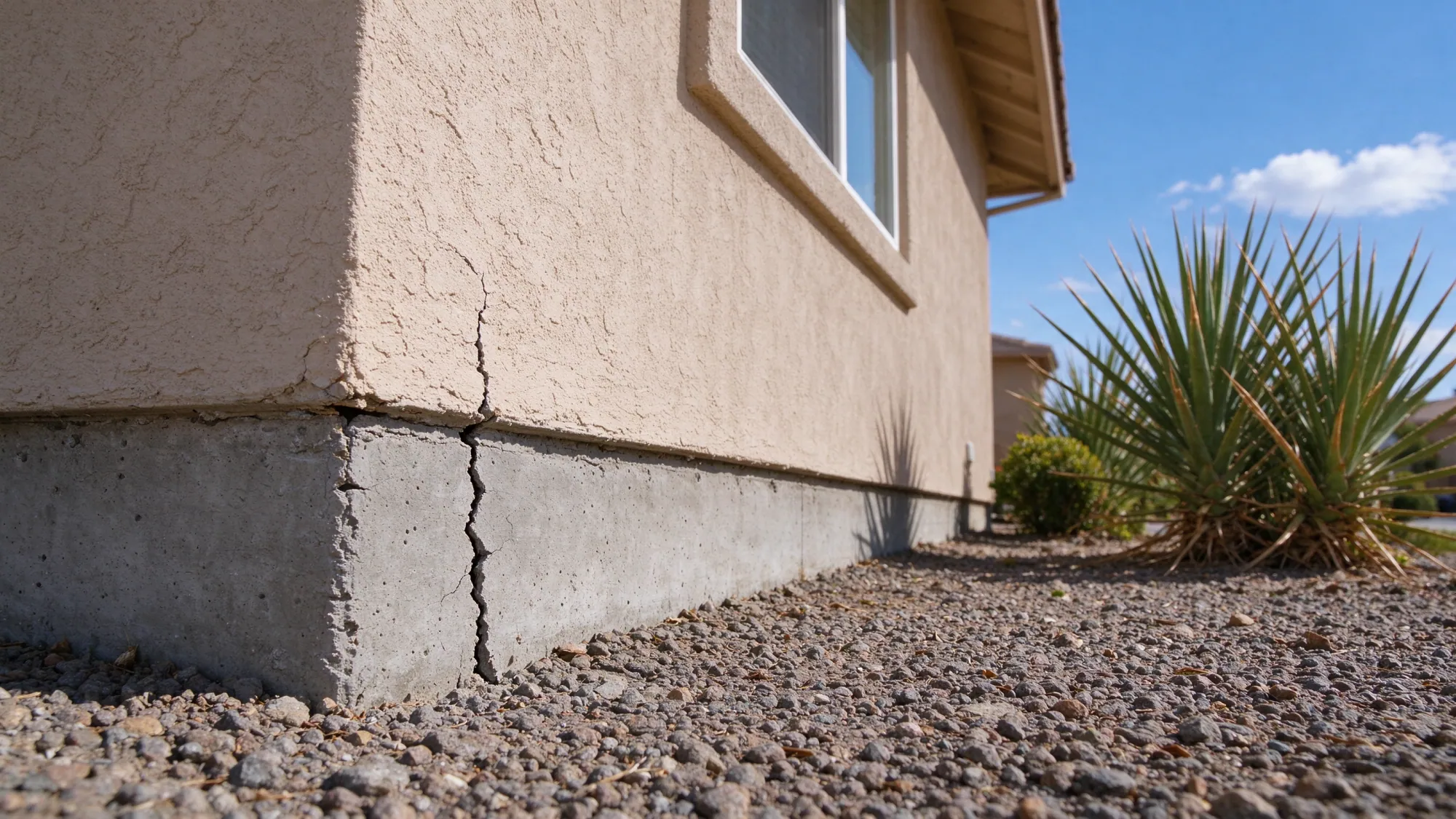
A structural crack affects an element or connection involved in carrying building loads; a nonstructural crack may be limited to finishes or material behavior without that consequence. The distinction depends on construction, displacement and cause. A crack’s width or appearance alone cannot reliably decide which repair belongs in the scope.
Valley Foundation Repair offers and manages residential and commercial foundation crack repair in North Las Vegas, with work fulfilled by licensed and insured contractors. The first decision is what the crack means in the affected part of the building, rather than which filler looks most convincing.
What does “structural” mean in a repair discussion?
A structural element participates in the load path. A footing transfers loads to the ground; a foundation wall carries loads from the building above; an engineered slab can have a supporting role defined by its design. Damage within one of those elements may affect its intended performance. That requires evaluation of the actual system, not simply a label applied to every crack in concrete.
A floor finish or drywall joint can crack without establishing a defect in the foundation. The reverse is also important: an interior finish can show the effect of movement elsewhere. Calling the visible finish nonstructural does not answer whether a structural change caused its distress. The assessment needs to distinguish the damaged material from the source of the movement.
This is why two similar photographs can lead to different work. One may show a stable material crack suitable for a defined repair. Another may show the visible symptom of a changing support condition. Comparing the photographs by line width alone leaves the important difference unresolved.
Which observations change the assessment?
Location establishes the first questions. A crack through a footing, a slab joint or a wall opening occurs in a different construction context. Note whether the line follows a material joint, passes through units, crosses an existing repair or separates adjoining building sections. The surrounding construction helps explain which forces and connections need attention.
Displacement matters as well as opening. If adjoining surfaces are offset, record that observation without forcing the surfaces together or disturbing the material. The direction of the offset can help frame the assessment, but it still does not establish whether the ground settled, heaved or was originally uneven.
Change over time is another useful distinction. A growing or reopening crack may require a different investigation from a documented stable condition. A single dated photograph cannot prove stability. Likewise, a short period without obvious change cannot establish that a movement mechanism has permanently stopped.
Why is there no single crack-width rule here?
Width is one observation within a larger assessment. It does not reveal reinforcing condition, footing dimensions, the load carried by a wall or the ground below it. Narrow damage in a critical connection can matter, while some wider gaps occur at movement joints or within finish systems. A universal pass/fail number would replace those distinctions with false certainty.
The same limitation applies to direction. A vertical line, diagonal line or stair-step pattern can suggest questions about the material and movement, but orientation is not a diagnosis by itself. The stair-step crack guide explains why a line following masonry joints still needs its support and wall construction established.
If you need a decision for a purchase, renovation or insurance inquiry, ask what the written assessment actually concludes. It may identify observed distress and recommend further investigation without certifying a particular cause or repair. A recommendation to investigate should not be rewritten as proof of structural failure.
Define the next step for your property.
Share the property location, what you have noticed and any existing reports. Start with the concern so the assessment can be defined.
(725) 999-4951When can injection or sealing be appropriate?
A defined crack repair can be suitable where the assessment supports the material, preparation and repair objective. Injection intended to seal a pathway is not the same as a repair designed to restore a structural connection. The proposal needs to state which purpose applies and what condition the chosen treatment can address.
The published planning range for a suitable hairline crack injection repair scope is $450–$1,800. It does not establish suitability, a crack count or a whole-building repair price. If a support problem is present, the injection scope should not be presented as a substitute for that separate work.
Surface preparation and access also matter. Finishes may obscure the full line, and the exposed condition may differ from what was visible when the estimate was prepared. Identify what access is included and how concealed findings will be handled before accepting a repair based only on the visible portion.
When does stabilization become a separate question?
If the foundation is moving because its support has changed, repairing a crack does not automatically restore the bearing beneath it. The design may need to consider soil conditions, footing connections and adjacent construction. Foundation settlement repair addresses a different objective from closing a line in the concrete surface.
Underpinning transfers loads through a defined support path. Ground treatment addresses specified soil or void conditions. Neither should be selected simply because a crack has been called structural. The proposed method must explain how it addresses the findings and what parts of the building remain outside its effect.
Stabilization and lifting should also be separated. Providing support does not promise to return every surface to an assumed original level or eliminate all finish damage. Where lifting is proposed, its intended amount, limitations and observation requirements belong in the written scope rather than being implied by the word repair.
What should a crack assessment and proposal leave clear?
The record should identify the affected material and location, the observations supporting the recommendation and any concealed conditions that remain unknown. Where independent structural engineering or soils investigation is needed, clarify that role before comparing construction prices. A contractor’s estimate is not automatically an independent diagnosis.
A written proposal should state the repair purpose, method and boundaries. Ask about access, required permits or inspections and restoration of disturbed finishes. Completion records should show what work was actually carried out, rather than leaving the owner with a general invoice that cannot be connected to the original concern.
For foundation crack repair, start with photographs, dates of observed change and any earlier repair documents. If the crack has returned, bring the earlier scope as well as the latest image. That information helps separate a material repair question from an unresolved movement question without assuming either answer in advance.