
For a foundation assessment, hire the professional whose scope answers the uncertainty you face. A structural engineer evaluates building behavior and design questions within an agreed scope; a foundation contractor develops and prices construction work. Independent engineering can be useful before choosing a repair when movement is significant, recommendations conflict or a design basis is unresolved.
For an initial service discussion, Valley Foundation Repair offers and manages residential and commercial foundation repair in North Las Vegas, fulfilled by licensed and insured contractors. The first review helps define what assessment and independent professional input the concern needs. It does not turn every estimate into an engineering certification.
What question are you trying to answer?
“I have a crack” can lead to several different decisions. You may need to know whether a structural element is affected, whether movement is continuing, what additional investigation is warranted or what a defined repair would cost. Those are related questions, but they do not always need the same type of appointment or document.
An assessment should begin with the concern and available records. Describe when you noticed the change, what is different and whether earlier work addressed it. That history helps identify the next useful investigation. It also prevents an estimate for one symptom from being mistaken for a complete explanation of the building.
If the immediate decision is whether an area can remain occupied, say that explicitly. A repair price does not answer an occupancy question by itself. The responsible professional must understand what you need the evaluation to establish and what limitations apply to that conclusion.
What can a structural engineer contribute?
Structural evaluation considers the building’s load path, observed distress and relevant capacity questions. A scoped investigation may examine the relationship between movement, the existing construction and a proposed repair. It should identify the information used, assumptions made and concealed conditions that remain unverified.
A repair design can address support locations, attachment details, temporary support and the sequence needed to maintain the building. Whether design is required, and what documents the permit authority expects, depends on the project. A stamped drawing is not a substitute for constructing and inspecting the work it describes.
Independent engineering is particularly useful when recommendations differ on fundamental matters. One proposal may assume footing settlement; another may attribute the floor pattern to heave. Asking an independent professional to evaluate the evidence can help resolve the underlying question before you compare construction prices.
What does the contractor assessment add?
A contractor assessment focuses on the concern, visible conditions and the practical scope the contractor may offer. Access, equipment routes, surface openings and restoration can be significant parts of that conversation. Those construction details help turn a supported recommendation into work that can be described and priced.
The initial review can identify the need for more information, including an elevation survey, independent structural evaluation or geotechnical investigation. It should not imply that concealed footing dimensions or soil properties are known simply because someone has viewed the outside of the building.
Ask what will be provided after the visit. A verbal opinion, a written estimate, an elevation record and an engineering report are different deliverables. The foundation assessment service explains how the concern and records establish the next step without promising that every possible test happens on every property.
Define the next step for your property.
Share the property location, what you have noticed and any existing reports. Start with the concern so the assessment can be defined.
(725) 999-4951When does a geotechnical professional become relevant?
Building observations describe what the structure is doing. Ground investigation addresses soil properties and mechanisms that may explain or control that behavior. Bearing suitability, wetting collapse, moisture-related volume changes and chemical ground conditions are examples of questions that a floor survey alone cannot resolve.
The geotechnical scope should be tied to a decision. Ask which uncertainty affects the proposed support method and what investigation could answer it. The purpose is not to collect a large report by default; it is to establish the ground information the design needs.
A regional map or an older subdivision report can provide context, but its relevance to the current building has limits. Later grading, additions and changes in moisture may matter. Read the guide to foundation soil reports before assuming that a document for the surrounding area supplies every design answer for the repair.
What can measurements establish?
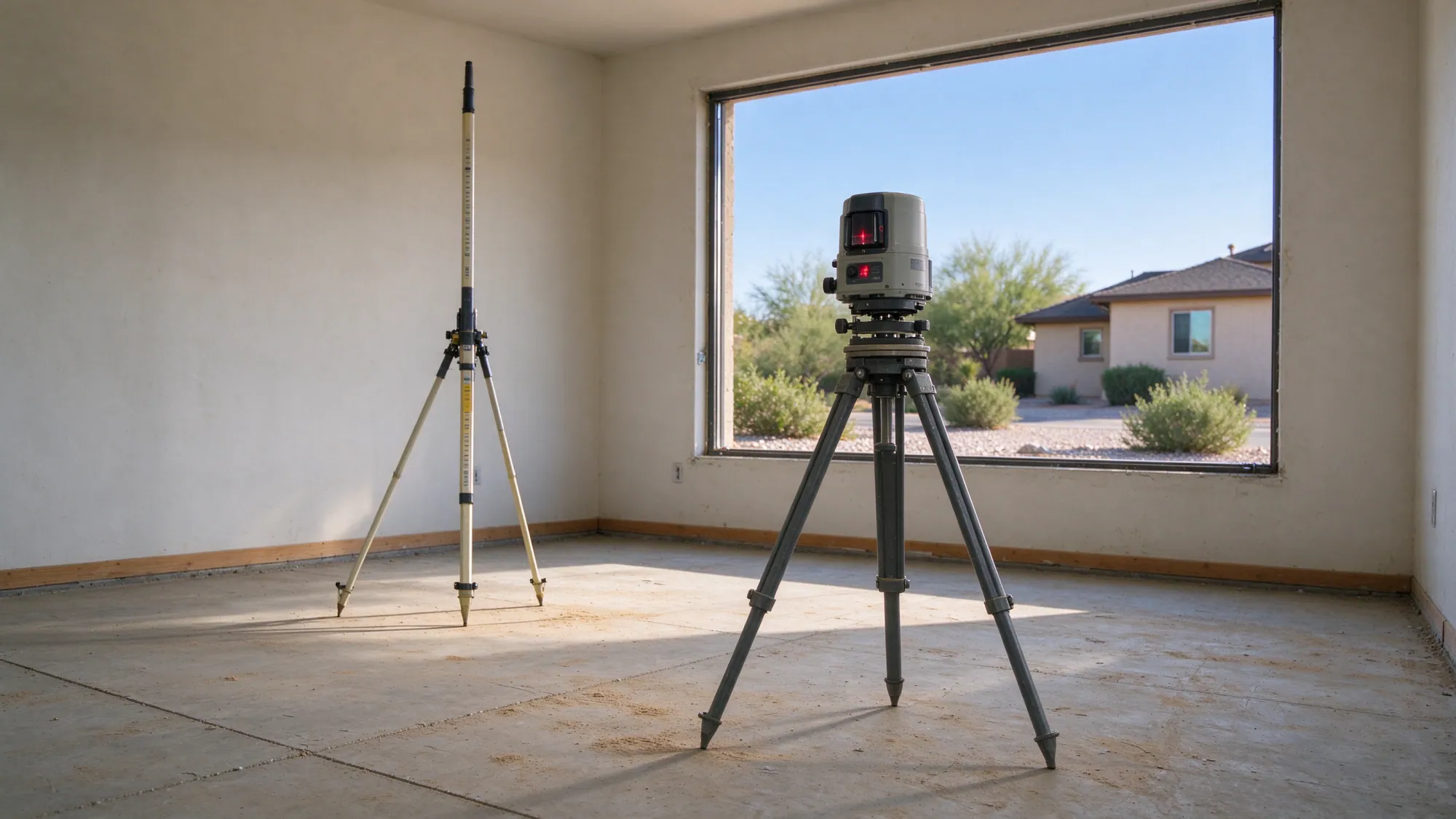
A floor elevation survey documents relative heights at selected points. It can reveal a pattern and provide a baseline. One survey cannot necessarily establish the original construction level or show whether movement is active. Repeat measurements need a consistent method and reference if they are to support a meaningful comparison.
Crack observations have similar limits. A close-up without its location, date or surrounding construction can be difficult to interpret. A documented sequence may show change, but the cause still needs evaluation. Measurements should answer an identified question rather than serving as a technical-looking substitute for analysis.
Where intrusive investigation is proposed, clarify who plans it and how the building will remain supported. Owners should not excavate beside footings or cut slabs to gather information themselves. The investigation can disturb the very system it is intended to understand.
How do you compare conflicting advice?
First compare the stated problem. Are both recommendations addressing the same building element and direction of movement? A proposal to support a perimeter footing and one to fill a void under a separate floor are not necessarily competing answers to the same question.
Then compare evidence and assumptions. Ask what footing dimensions, loads and ground conditions each recommendation relies on, and which have been verified. A larger support count is not evidence by itself that a repair is more appropriate. A lower price may simply exclude design, inspections or restoration.
Finally, request a clear explanation of what would change the recommendation. If opening an area or reviewing a soils report could alter the method, that contingency belongs in the planning discussion. The repair quote comparison guide helps organize the construction side after those underlying questions are resolved.
What should the documents and responsibilities say?
Identify the party providing each service, the document to be delivered and its intended use. Engineering, geotechnical evaluation and construction are separate responsibilities even when they contribute to one repair. A permit authority may also require inspections or observations that must be arranged as part of the project.
For a home sale or commercial transaction, establish who needs the report and what question they need answered. A buyer, lender, insurer and building owner may have different documentation requirements. Do not assume that a report commissioned for one purpose will automatically satisfy another.
Keep complete reports with their qualifications, photographs and any referenced drawings. Quoting one sentence can lose important limits. Bring that material to a foundation assessment discussion so the next step can address the actual uncertainty, with a construction proposal developed when the required evidence is available.